
The five ways a list of links costs more than you planned
None of these are scandals. They are ordinary consequences of how the service is built, and every one of them is written down on an official page that nobody reads before ordering.
One: the item sells out after you have paid
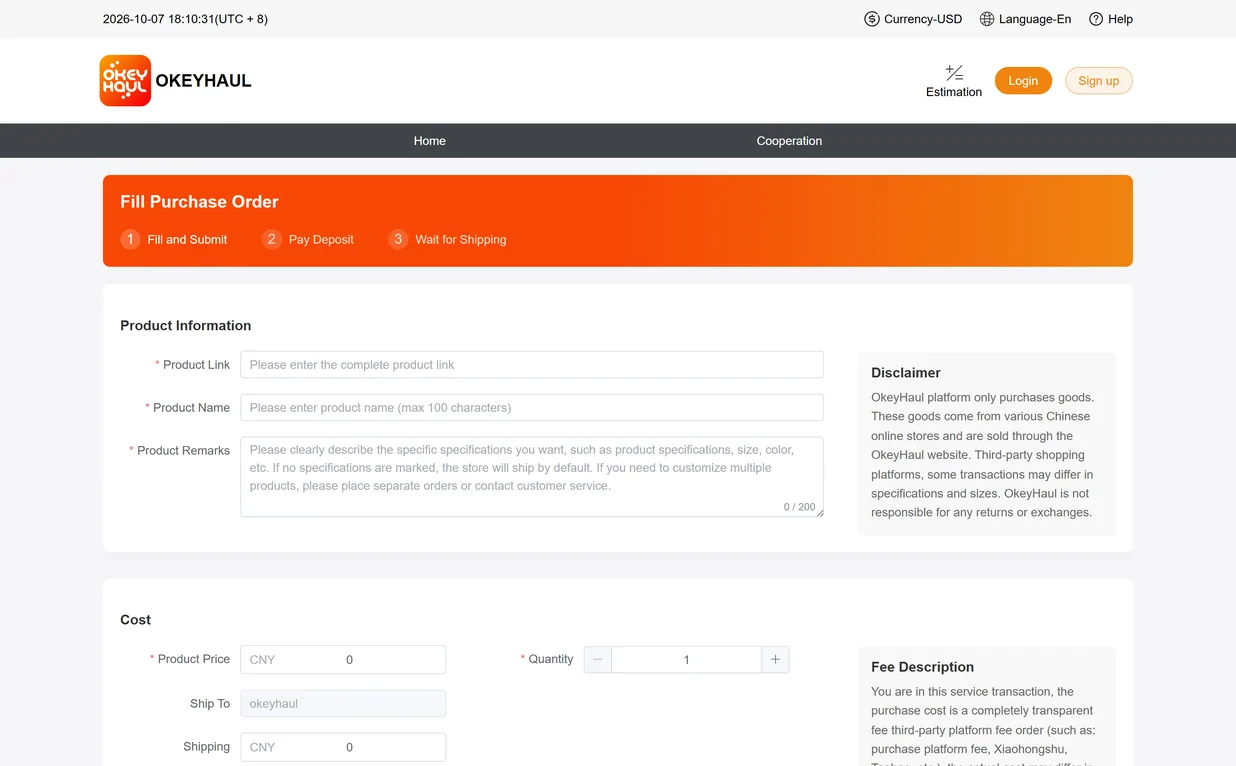
You pay, and then you are told the item is not available. The official explanation is blunt about the cause: some sellers do not update their online inventory in time, so a listing can still look live after the stock has gone. Okeyhaul says it will double check with the seller, and that the outcome depends on the seller.
The practical consequence for a list is that a batch is only as fast as its slowest link. If three items are shelved and one is stuck in a stock check, your parcel either waits or goes without it.
What helps: order the item you actually care about on its own, and treat the extras as things that can join the next parcel. official help article 211
Two: the price moves, and the difference is yours
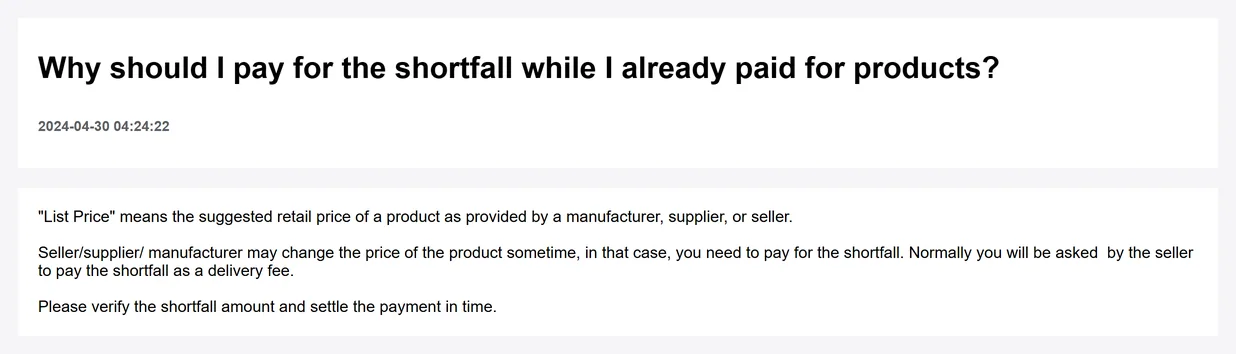
The official wording is that a seller, supplier or manufacturer may change a price, and in that case you pay the shortfall. It is normally presented as a delivery fee top up.
This is not a scam and it is not unique to Okeyhaul. It is what happens when a listing price is a suggestion rather than a contract. What matters is that the top up lands on the commodity order, so it can arrive days after you thought the item was paid for.
Where it hits
On the commodity order, before the goods leave the seller. The parcel does not exist yet. official help article 214
What triggers it
A seller price change, or an order heavy enough that the domestic delivery fee was underpaid. official help article 222
What to do
Keep a small account balance so a shortfall does not stall the order, and check the order page rather than waiting for an email. official help article 213
Three: one restricted item stops the whole waybill
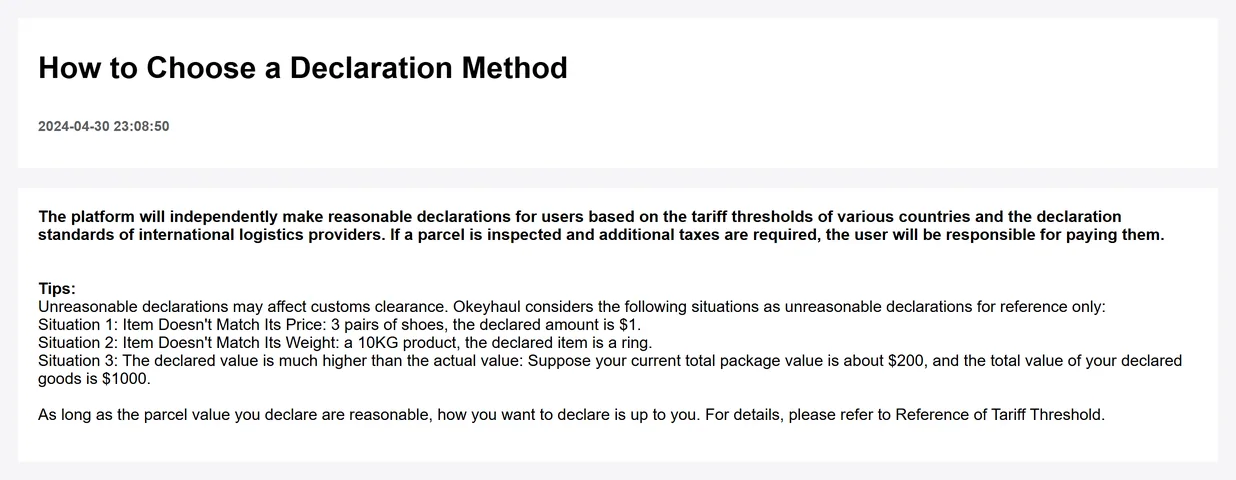
This is the failure that surprises people most, and it is the reason this guide separates the two units so insistently. Mailing restrictions are applied when you submit the waybill, not when the goods arrive. So a restricted item sits happily on the shelf for weeks, and then refuses to let a parcel be created.
The official line is short: some items may involve mailing restrictions and they will be restricted when submitting the package waybill. Separately, the disclaimer names the sensitive group that gets taken out to protect a shipment, including essential oils, care solutions, lubricants, batteries and glue.
The fix is to leave that item behind and ship the rest, which means paying international freight twice. Deciding this before you build the parcel is much cheaper than discovering it at the waybill screen. official help article 253, official help article 224
Four: the storage clock started without telling you
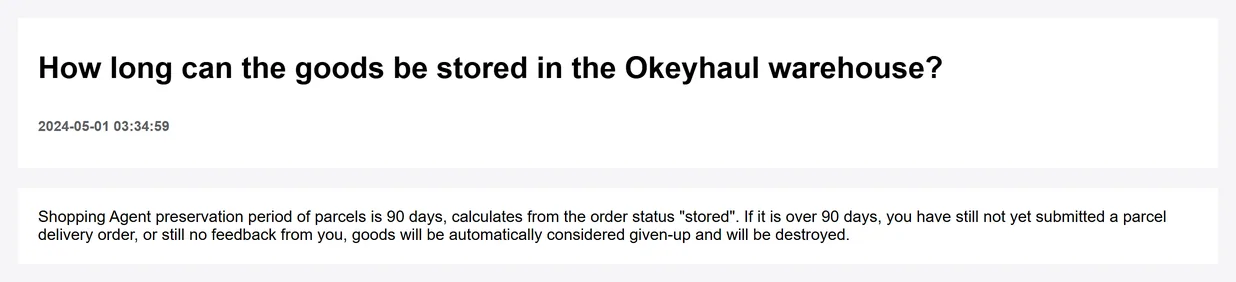
Free storage does not start when you log in or when you last thought about the order. It starts at a warehouse status change, and the official pages give four different accounts of how long it runs and which status starts it.
We are not going to pick one for you. What we will say is that the shortest reading is the safe one to plan against, that an extension is sold per commodity order in blocks of one hundred days, and that the consequence at the end of the period is described as the goods being treated as given up.
A third party measurement by QCRadar on 2026-07-31 recorded the free storage as 100 days, which matches one of the four readings.
Five: the weight you paid for is not the weight that ships
Goods are weighed and measured on arrival. The parcel is weighed again after packing, and the difference is settled against your balance in either direction. That is fair, and it is also why a freight number you saw three weeks ago is not a promise.

| What changes the number | When it happens | Where it settles |
|---|---|---|
| Packing adds or removes material | After the waybill is submitted | Refunded to, or deducted from, the balance. official help article 213 |
| Volume beats weight for bulky items | At packing | The parcel bill. Vacuum packing is the paid answer. official help article 245 |
| Reinforcement is added to fragile items | Before shipping | The item is re-weighed after the service. official help article 242 |
| The packed parcel misses the size limit of the route | At dispatch | It comes back to the warehouse and you choose again. official help article 270 |
Checked 2026-08-20. Pre packing exists so that you can see the real weight before paying freight rather than after.
The questions these raise
Can I cancel a commodity order after paying?
It depends on whether the seller has dispatched. Before dispatch, support can contact the seller to exchange or cancel. After dispatch, an exchange means the goods travel to the warehouse first and you carry the return delivery fee. official help article 219
If one item is restricted, does the parcel disappear?
No. The waybill will not submit until the flagged item is out of the selection. The other items keep their shelf place and their storage clock. official help article 253
What happens if I simply never build a parcel?
At the end of the free storage period the official pages describe the goods as considered given up and disposed of. Extensions are sold per commodity order in blocks of one hundred days, and have to be bought before expiry rather than after. official help article 278, official help article 241
The courier says the box was damaged. Who pays?
Inspect in front of the courier and refuse or annotate if there is a problem. If it was already signed for, keep the outer box and the tape and contact support within two days, with anything abnormal reported within 72 hours of signing. For items the courier judges fragile, the loss sits with the buyer. official help article 265, official help article 267